

What Is Remarketing And How It Works
Have you ever visited an online shopping website, looked at a product and then noticed advertisements for that same product while browsing other websites or social media? This is not a coincidence. It is an example of remarketing, a digital advertising strategy that helps businesses reconnect with people who have previously interacted with their website, application or online content.
Many potential customers do not make a purchase or submit an enquiry during their first visit. They may compare different options, explore prices or simply leave because they are not ready to make a decision. Remarketing gives businesses another opportunity to reach these visitors with relevant advertisements and encourage them to return.
Understanding What Is Remarketing is important for businesses that want to improve customer engagement, increase conversions and make better use of their advertising budgets. When planned properly, it can become a valuable part of a broader digital marketing strategy.
What Exactly Is Remarketing?
Remarketing is an online advertising technique that allows businesses to show targeted advertisements to people who have previously interacted with their digital platforms. These interactions may include visiting a website, viewing a product, adding an item to a shopping cart, downloading an application or engaging with particular online content.
The main purpose is to reconnect with interested users and encourage them to complete an action they may not have taken during their first interaction.
For example, imagine someone visits an online clothing store and looks at a pair of shoes but leaves without purchasing them. Later, while browsing another website or using a social media platform, that person may see an advertisement featuring similar shoes from the same store.
This reminder can bring the visitor back to the website and encourage them to complete the purchase.
Unlike advertisements designed primarily to introduce a brand to new audiences, remarketing focuses on people who already have some level of familiarity with a business. This makes it useful for supporting the customer journey and maintaining brand visibility.
How Does Remarketing Work?
Remarketing works by identifying eligible website or platform visitors and using audience information to display relevant advertisements to them later. The exact process depends on the advertising platform and the tracking technologies being used.
Here is how a typical campaign works.
1. A Visitor Interacts With Your Website
The process begins when someone visits a business website or interacts with its digital content. They may browse product categories, read a blog, check service information or add products to their shopping cart.
These activities can indicate the visitor’s interests and help businesses understand which products or services may be relevant to them.
2. A Tracking Method Records Eligible Activity
Businesses use advertising tags, pixels or other supported tracking methods to collect information about website interactions. Depending on the platform and privacy settings, this information can help identify visitors who meet specific audience conditions.
For example, an online store may create an audience of users who viewed a particular product category.
Modern advertising platforms also offer different audience-building methods, including customer lists and other permitted data sources.
3. Visitors Are Added to an Audience
After the required interaction is recorded, eligible visitors can become part of a remarketing audience.
Businesses can organise these audiences according to their behaviour. Someone who visited the homepage may receive different advertisements from someone who viewed a product or started the checkout process.
This segmentation helps businesses deliver more relevant advertising instead of showing identical messages to every visitor.
4. Relevant Advertisements Are Displayed
When members of an eligible audience use participating websites, applications or advertising platforms, they may be shown advertisements from the business.
These advertisements can appear in different formats, including image ads, video ads, search ads and social media promotions.
5. Visitors Return and Take Action
The final goal is to encourage interested users to revisit the website and complete a meaningful action. This could involve purchasing a product, booking an appointment, submitting an enquiry or signing up for a newsletter.
Understanding What Is Remarketing also means recognising that not every visitor will convert immediately. The strategy focuses on creating additional opportunities to engage with potential customers.
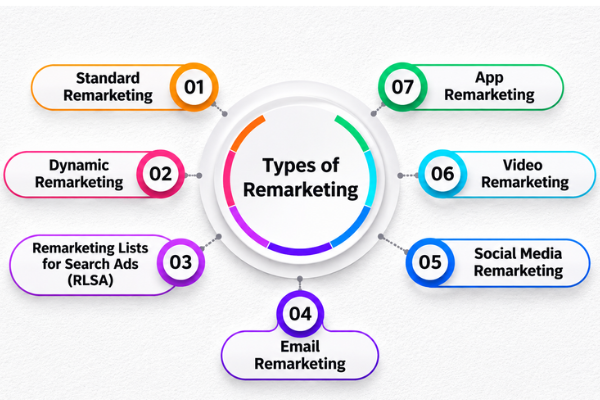
What Are the Different Types of Remarketing?
Businesses can use different remarketing methods depending on their advertising objectives, audience and marketing platforms.
1. Standard Remarketing
Standard remarketing displays advertisements to people who have previously visited a website or app while they browse other websites and applications. Businesses use audience lists based on eligible visitor activity to show relevant ads. This helps maintain brand visibility and encourages potential customers to return and complete desired actions.
2. Dynamic Remarketing
Dynamic remarketing displays personalised advertisements based on products or services users have previously viewed. For example, an online store can remind visitors about items they explored, helping renew their interest and encourage purchases.
3. Remarketing Lists for Search Ads (RLSA)
RLSA allows advertisers to customise search campaigns for previous website visitors. Businesses can adjust bids, advertisements and landing pages according to users’ earlier interactions, making search campaigns more relevant.
4. Email Remarketing
Email remarketing reconnects with customers through personalised messages. For example, businesses can send shopping cart reminders, product updates or special offers to encourage subscribers to return and complete purchases.
5. Social Media Remarketing
This method targets eligible previous website visitors or social media users with relevant advertisements on platforms such as Facebook and Instagram. It helps businesses reconnect with interested audiences and encourage conversions.
6. Video Remarketing
Video remarketing displays advertisements to people who have previously engaged with a brand’s videos or YouTube channel. It helps maintain brand awareness and encourages further interaction.
7. App Remarketing
App remarketing targets users who have installed an application but are no longer active. Personalised notifications and offers can encourage them to reopen the app, explore features and engage again.
Why Is Remarketing Important for Businesses?
Remarketing provides several advantages for businesses that want to improve their online advertising performance.
1. Reconnects With Interested Customers
People who have already visited a website may have some interest in its products or services. However, they may need more time or information before making a decision.
Remarketing allows businesses to reconnect with these users and provide additional opportunities to explore their offerings.
2. Improves Brand Recognition
Repeated exposure to relevant advertisements can help customers become more familiar with a brand.
When users recognise a business across different online platforms, they may be more likely to remember it when they are ready to purchase.
However, advertisements should be displayed at reasonable intervals to avoid overwhelming audiences.
3. Supports Higher Conversion Opportunities
Some visitors leave websites without completing an intended action. Remarketing can remind them about the products, services or offers they previously explored.
For example, an online education provider may reconnect with people who visited its course pages but did not submit an enquiry.
These additional interactions can create more opportunities for conversions, although results depend on audience quality, advertising relevance and campaign execution.
4. Helps Businesses Use Advertising Budgets Effectively
Rather than focusing only on reaching new audiences, businesses can allocate part of their advertising budgets towards eligible users who have already shown interest.
This can help advertisers create more focused campaigns and evaluate which audience groups deliver meaningful results.
5. Supports Different Stages of the Customer Journey
Not every customer is ready to purchase immediately. Some are researching, others are comparing options, and some are close to making a decision.
Remarketing allows businesses to develop different messages for these stages.
For example, a first-time visitor may see an advertisement introducing the brand, while someone who abandoned a shopping cart may receive a reminder about the products they selected.
How to Create an Effective Remarketing Campaign
A successful campaign requires proper planning, audience understanding and continuous optimisation.
1. Define Your Campaign Objectives
Before creating advertisements, decide what you want to achieve. Your objective may be to increase purchases, generate enquiries, encourage registrations or bring visitors back to important website pages.
Clear objectives make it easier to select suitable audiences and measure campaign performance.
2. Install the Appropriate Tracking Tools
Set up the required advertising tags, pixels or conversion tracking tools according to the platform’s instructions.
For example, Google Ads and Meta Ads offer different tracking and audience-building options. Make sure the tracking setup follows applicable privacy requirements and consent rules.
Test your implementation before launching the campaign to ensure that relevant interactions are being recorded correctly.
3. Segment Your Audience
Avoid treating every website visitor as having the same interests.
Create audience groups based on their interactions, such as:
- Homepage visitors.
- Product or service page visitors.
- Shopping cart abandoners.
- Previous customers.
- Visitors who completed a specific action.
Audience segmentation allows businesses to develop advertisements that better match user interests.
4. Create Relevant Advertisements
Your advertisement should connect with the audience’s previous interaction.
For example, an advertisement targeting people who viewed a particular product can highlight that product’s features or provide useful information about it.
Use clear headlines, attractive visuals and relevant calls to action. Avoid misleading promotional messages or unnecessary urgency.
5. Set Appropriate Campaign Duration and Frequency
Showing advertisements too frequently can create a negative experience. Businesses should use suitable frequency controls and audience membership durations where supported by the platform.
It is also important to exclude people who have already completed the intended action when further advertising is unnecessary.
For example, customers who have purchased a product may not need to continue seeing advertisements encouraging them to buy the same item.
6. Monitor and Optimise Performance
After launching a campaign, review its performance regularly.
Important metrics include impressions, clicks, click-through rate, conversions, conversion rate and cost per conversion.
Businesses should also compare results across different audience groups and advertisement variations.
Testing different headlines, images, offers and landing pages can help identify which combinations perform better.
Measuring Success in Remarketing
Measuring the performance of remarketing campaigns helps businesses understand whether their advertising efforts are delivering the desired results. By tracking the right metrics, marketers can identify successful strategies, improve audience engagement and increase conversions.
1. Conversion Tracking: Conversion tracking measures how many users complete a desired action after interacting with remarketing ads. These actions may include making a purchase, filling out a form or subscribing to a newsletter. Monitoring conversion rates helps identify which ads and strategies encourage users to take action.
2. Click-Through Rate (CTR): CTR shows the percentage of people who click on an ad after seeing it. A higher CTR often indicates that the advertisement is relevant and appealing to the target audience. A low CTR may suggest that the ad design, message or targeting needs improvement.
3. Cost Per Acquisition (CPA): CPA measures the average amount spent to generate one conversion. Tracking this metric helps businesses understand whether their remarketing campaigns are cost-effective and where advertising budgets can be better managed.
4. Return on Investment (ROI): ROI compares the revenue generated by a campaign with its total cost. It helps businesses assess profitability and decide how to allocate marketing budgets.
5. Audience Engagement: Metrics such as time spent on a website, pages viewed and repeat visits reveal how effectively remarketing ads bring users back and encourage further interaction.
Common Remarketing Mistakes Businesses Should Avoid
Although remarketing can be useful, poor campaign management may reduce its effectiveness.
Some common mistakes include:
- Targeting everyone with the same advertisement: Different visitors have different interests and should receive relevant messages.
- Showing advertisements too frequently: Excessive exposure can frustrate users and negatively affect brand perception.
- Ignoring existing customers: Businesses should exclude converted users when advertisements are no longer relevant or create separate campaigns for repeat purchases.
- Using outdated advertisements: Old promotions, unavailable products and expired offers can damage customer confidence.
- Not tracking conversions correctly: Without reliable measurement, businesses may struggle to understand whether campaigns are generating meaningful results.
- Ignoring privacy requirements: Advertisers must follow applicable data protection laws, consent requirements and platform policies when collecting and using audience information.
Avoiding these mistakes can help businesses create more relevant advertising experiences.
Which Platforms Can Businesses Use for Remarketing?
Several digital advertising platforms provide remarketing or similar audience re-engagement features.
Google Ads
Google Ads allows businesses to create audience segments using eligible website and application interactions. Depending on campaign type and audience eligibility, advertisements can reach users across supported Google advertising inventory.
Meta Ads
Meta Ads provides audience tools that allow advertisers to reconnect with eligible website visitors and people who have interacted with their Facebook or Instagram content.
YouTube
Businesses can use video engagement audiences to reach eligible people who have previously interacted with their YouTube videos or channel.
Email Marketing Platforms
Email marketing can also support customer re-engagement through permitted subscriber lists. Businesses can send relevant updates, product recommendations and promotional messages to people who have opted in to receive communications.
Each platform has different features, audience requirements and privacy considerations. Businesses should select the tools that best match their objectives and target audience.
How Can Digital Marketing Professionals Learn Remarketing?
Learning remarketing is an important step for anyone who wants to build a career in online advertising. It helps digital marketing professionals reconnect with people who have previously visited a website, viewed products or interacted with a brand. To run successful campaigns, learners need to understand audience behaviour, ad platforms, tracking tools and campaign optimisation.
A structured digital marketing course can help beginners develop these skills through guided lessons and practical exercises. A well-designed programme should cover:
- Google Ads and Meta Ads: Learn how to create and manage remarketing campaigns across popular advertising platforms.
- Audience Segmentation: Understand how to group website visitors based on their interests, actions and previous interactions.
- Conversion Tracking: Learn how to measure purchases, enquiries, sign-ups and other valuable actions.
- Ad Creation: Develop engaging advertisements with relevant messages and creative designs.
- Analytics and Optimisation: Study campaign reports, evaluate performance and make improvements to achieve better results.
Practical training is equally important because it allows learners to apply their knowledge to real campaign scenarios. Enrolling in a digital marketing institute can provide expert guidance and help students build industry-relevant skills.
Conclusion
Remarketing is an effective digital advertising strategy that helps businesses reconnect with people who have previously visited their websites, used their apps or interacted with their online content. By showing relevant advertisements to interested audiences, businesses can strengthen brand awareness, encourage repeat visits and create more opportunities to generate conversions.
Understanding what remarketing is and how it works allows businesses to make smarter advertising decisions. Strategies such as audience segmentation, dynamic ads, conversion tracking and campaign optimisation help create more relevant and effective campaigns. However, successful remarketing is not simply about showing the same ads repeatedly. It requires understanding customer interests, delivering useful messages and regularly monitoring campaign performance.
When combined with SEO, social media marketing and other digital marketing strategies, remarketing can support long-term online growth.
Want to build effective remarketing campaigns and strengthen your online presence? Connect with Stepupcity today! Our digital marketing experts can help you understand the right strategies to reach your audience, improve campaign performance and grow your business.